Read Anna Karenina by email.
Everybody remembers the affair. Half the book belongs to Levin.
A married woman meets a cavalry officer on a Moscow railway platform, and Tolstoy spends eight parts on what everyone around them does about it. Garnett’s first line is the one everybody knows; the other 350,000 words are the ones almost nobody gets to.
Two or three minutes a day, and every installment opens with a line reminding you where you left off.
Two years from now, you will have read Tolstoy.
675 installments, one an email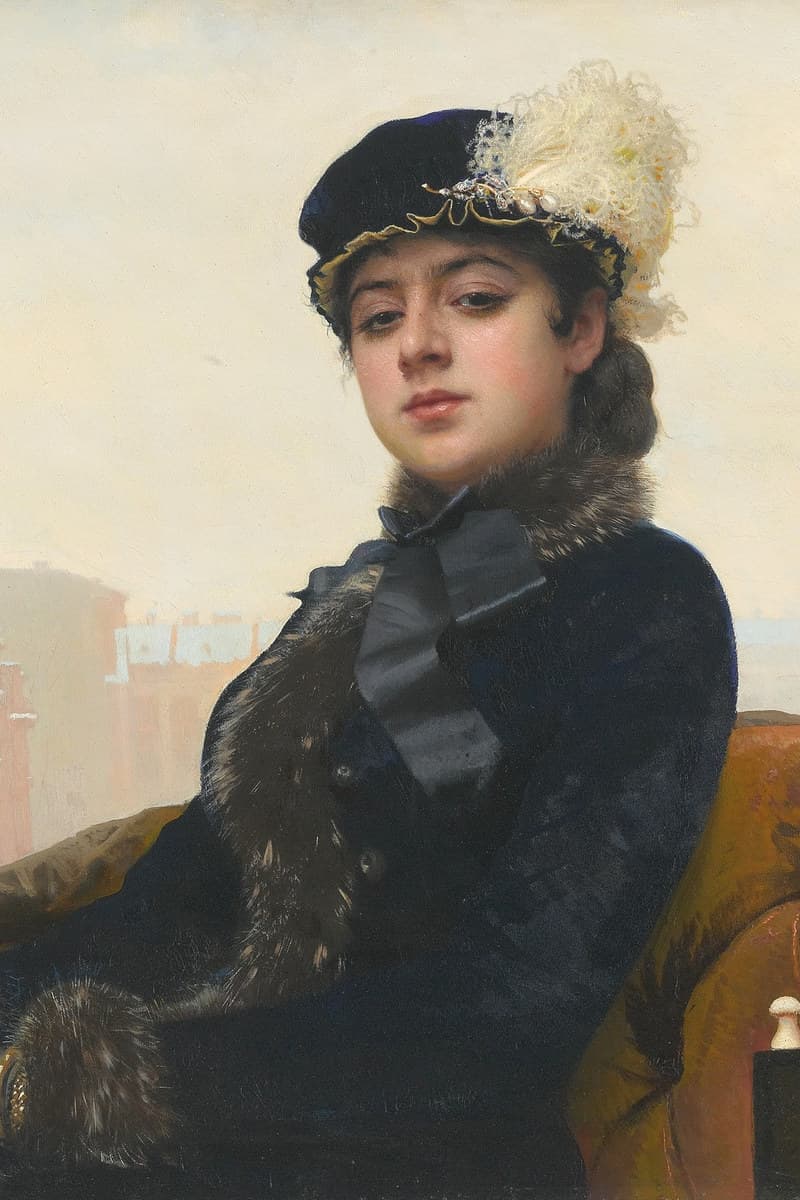
- First published
- 1878
- Translation
- Garnett
- Installments
- 675
- Each installment
- 2–3 min
How long it takes
- Words
- 350,294
- Reading time
- 24 hours 20 minutes
- At 5 minutes a day
- 9.5 months
- At 10 minutes a day
- 5 months
- At 20 minutes a day
- 2.5 months
At 240 words a minute, the average for adult silent reading. Use your own speed

Why read Anna Karenina?
Tolstoy built it out of short chapters — 239 of them across eight parts, most only a few pages — and he alternates between two stories that barely touch: Anna and Vronsky in Petersburg drawing rooms, Levin and Kitty out on the land. Read straight through, that switching is the standard complaint. Read one piece a morning and it becomes the engine: whichever thread you were in yesterday, tomorrow hands you the other one, and neither has time to go stale.
We serialize Constance Garnett’s 1901 translation in the Standard Ebooks edition, cut at paragraph boundaries inside Tolstoy’s own chapters, never mid-paragraph. Every subject line says exactly where you are — “Part I, Chapter I · 1 of 2” — and installment 1 opens on the novel’s first sentence, because this edition puts nothing in front of it: no preface, no epigraph, no editor clearing his throat. Each installment after the first carries a one-line recap of the one before.
675 mornings is the longest run in the catalogue: about a year and ten months, or a quarter of an hour a week. That is the whole argument for reading it this way — 350,294 words is a wall if you meet it all at once, and five hundred words is something you finish before the coffee cools. Part Eight arrives in your second winter, and by then the Oblonskys have been people you know for the better part of two years.
Frequently Asked Questions
How long does it take to read Anna Karenina?
About twenty-four hours straight through (350,294 words). By email, it’s 675 daily installments of 2–3 minutes each — a year and ten months, or about eleven months at a premium pace of two installments a day.
Is Anna Karenina hard to read?
No. It is long, which is a different problem and the one the daily format exists to solve. The chapters are short, the scenes are concrete — a steeplechase, a day of mowing, a dinner party going quietly wrong — and Garnett’s English is plain. Standard Ebooks ships this novel without a single endnote, which tells you how much explaining it needs.
What about the Russian names?
Everyone carries a first name, a patronymic and a surname, and their friends use a fourth thing entirely: Stepan Arkadyevitch Oblonsky is Stiva, Anna is Anna Arkadyevna to society and Madame Karenina to strangers, and Konstantin Dmitrievitch Levin is mostly just Levin. The one-line recap at the top of each installment keeps the cast straight, and inside two weeks the names stop being work.
Which translation is this?
Constance Garnett’s 1901 translation, in the carefully typeset Standard Ebooks edition — the same translator behind our Crime and Punishment and The Death of Ivan Ilyich. Garnett’s opening reads “Happy families are all alike; every unhappy family is unhappy in its own way,” which is not the “All happy families are alike” version you have probably seen quoted; that one belongs to other translators.
How does it arrive?
One email a day at the hour you pick, with a one-line recap of the previous installment at the top. Free. Pause or unsubscribe from any installment.
Constance Garnett translation, Standard Ebooks edition, public domain. Texts from Standard Ebooks and Project Gutenberg editions. Not affiliated with either.