Read The Scarlet Letter by email.
A public shaming, and the long life it has afterwards.
Boston, in the Puritan seventeenth century: a woman stands on the scaffold with a scarlet A on her breast and her child in her arms, refusing to name the father. Hawthorne's novel of sin, secrecy, and public judgment — the guilty hide in plain sight while the letter does its slow work on everyone it touches.
Two or three minutes a day, and every installment opens with a line reminding you where you left off.
Four months from now, you will have read Hawthorne.
118 installments, one an email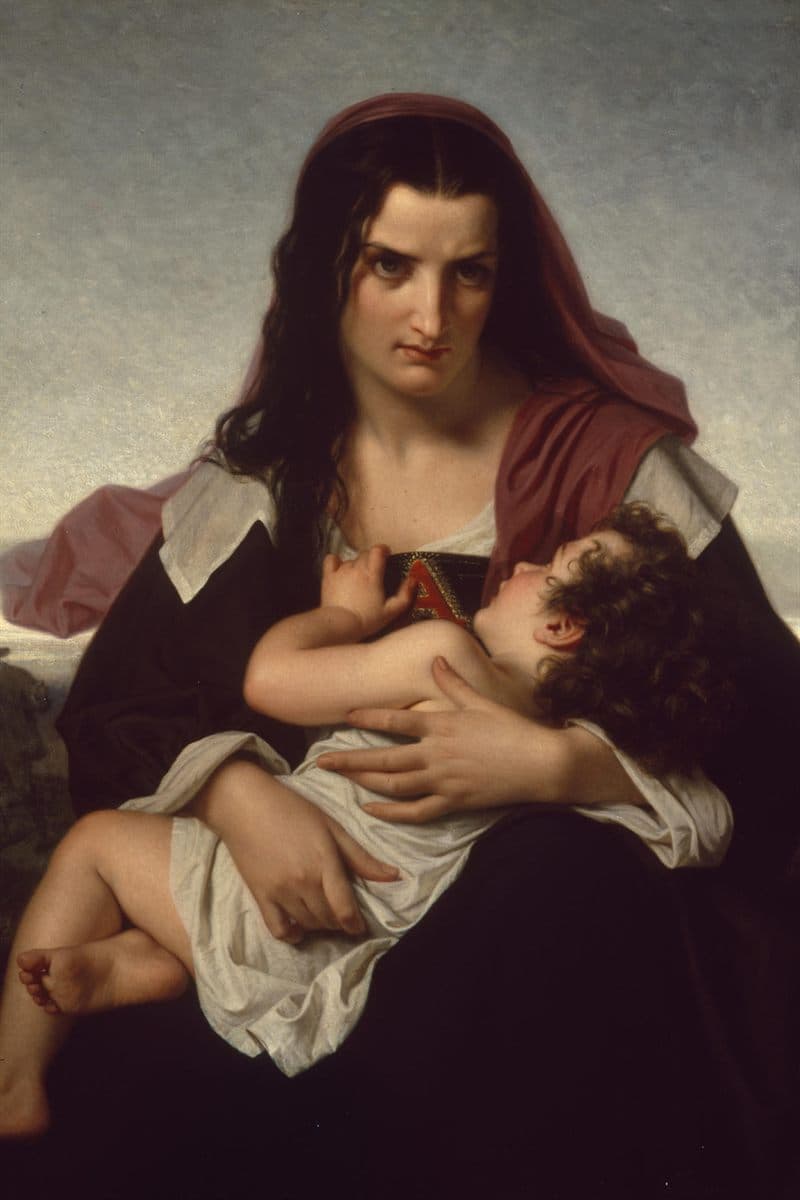
- First published
- 1850
- Installments
- 118
- Each installment
- 2–3 min
How long it takes
- Words
- 67,965
- Reading time
- 4 hours 43 minutes
- At 5 minutes a day
- 8 weeks
- At 10 minutes a day
- 4 weeks
- At 20 minutes a day
- 2 weeks
At 240 words a minute, the average for adult silent reading. Use your own speed
Why read The Scarlet Letter?
The Scarlet Letter is usually called the first great American novel, and it earns the title by inverting the usual shape of a scandal. The exposure happens on page one — Hester Prynne walks out of the prison door already condemned, already wearing the letter. Everything after is the slower story: what public shame does to the woman who bears it openly, what hidden guilt does to the man who doesn't, and what revenge does to the one who feeds on them both.
It is also, conveniently, a short book of short chapters — twenty-four of them, each a single composed scene with a title like a painting's: “The Interview,” “A Forest Walk,” “The Minister's Vigil.” Hawthorne's sentences are ornate by modern standards, but taken a few minutes at a time they read as what they are: some of the most deliberate, symbol-laden prose in American literature, built to be lingered over rather than gulped.
The novel turns on things characters know but will not say, so the serial form does it a real service: a “Previously” recap on each installment keeps you oriented, and the recaps are written to keep the book's own secrets — nothing is named before the page where Hawthorne names it.
Frequently Asked Questions
How long does it take to read The Scarlet Letter?
About five hours straight through (67,965 words). By email, it's 118 daily installments of two to three minutes — just under four months, or faster at a premium pace of two or three installments a day.
Is The Scarlet Letter hard to read?
Hawthorne's prose is formal and richly figurative — long sentences, sustained symbols — and that's precisely what a serial pace is for. A few minutes a day is enough to give each scene its due, and the chapters are short, self-contained set pieces.
What about “The Custom-House” introduction?
We deliver the novel itself, beginning at Chapter I. Hawthorne's famous autobiographical introduction — where he claims to have found the scarlet letter in the Salem custom house — is a third the length of the novel and routinely skipped by readers; the story is complete without it.
Why is The Scarlet Letter assigned in school?
Because it compresses the big American arguments — conscience versus community, public punishment versus private guilt, the individual versus the theocracy — into one drama with three unforgettable figures. Read as an adult, without a quiz at the end, it is a darker and stranger book than most people remember.
Which edition is this?
Hawthorne's original 1850 text (no translation needed), in the carefully typeset Standard Ebooks edition, drawn from the public-domain text.
Do the recaps spoil anything?
No. Each recap covers only the previous installment, and the recaps keep the novel's own veils in place — the identities the book withholds stay withheld until the page where Hawthorne reveals them.
How does it arrive?
One installment per email, one email a day, at the hour you pick, with a one-line recap of the previous installment at the top. Free. Unsubscribe or pause anytime.
Standard Ebooks edition, public domain. Texts from Standard Ebooks and Project Gutenberg editions. Not affiliated with either.