Read King Lear by email.
A month of mornings, and the war itself takes one of them.
An old man asks his three daughters which of them loves him most, and the honest one says nothing. Thirty-one mornings: two families coming apart in step, a storm that takes a full week of them, and a war that arrives in one short email.
Three or four minutes a day, and every installment opens with a line reminding you where you left off.
Four weeks from now, you will have read Shakespeare.
31 installments, one an email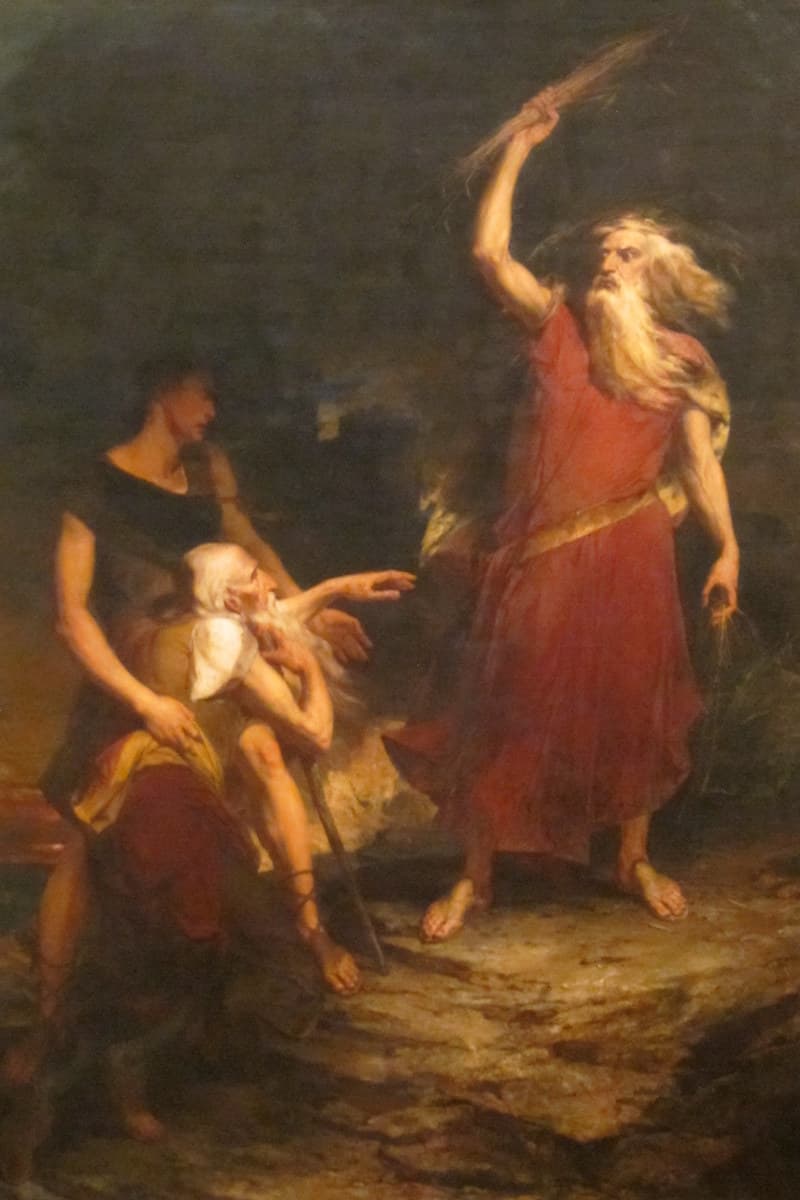
- First published
- 1606
- Installments
- 31
- Each installment
- 3–4 min
How long it takes
- Words
- 27,935
- Reading time
- 1 hour 56 minutes
- At 5 minutes a day
- 3 weeks
- At 10 minutes a day
- 12 days
- At 20 minutes a day
- 6 days
At 240 words a minute, the average for adult silent reading. Use your own speed
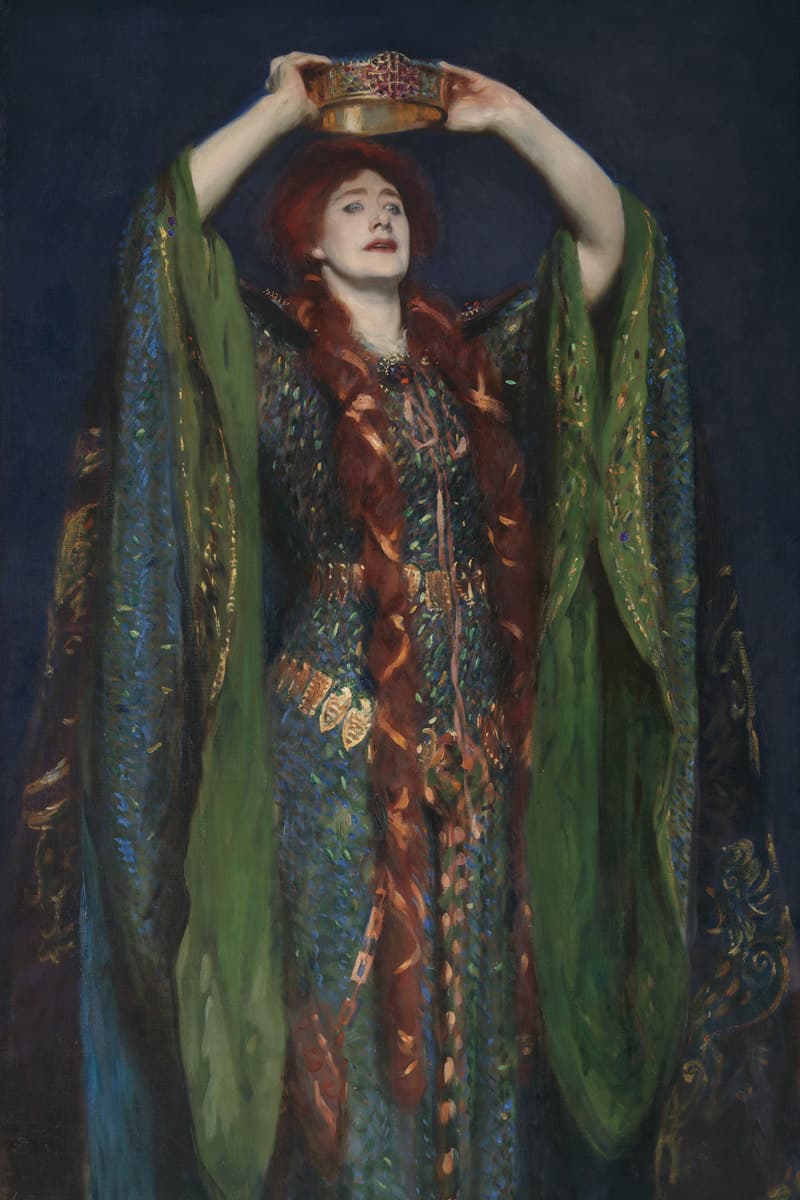

Why read King Lear?
King Lear runs two ruined families side by side — a king with three daughters, an earl with two sons — and Shakespeare alternates them scene by scene, so serialising it is only the play doing what it already does. Twenty-six scenes across thirty-one mornings, very unevenly. The whole of Act III is seven consecutive emails on a heath in a storm, none of them long. Act V Scene 2 is the battle the play has been moving toward for a month: under 150 words, half a minute, most of it a stage direction about an army crossing the stage and going off again. Its last exchange is “Ripeness is all” and “And that’s true too,” and the war is over.
The verse arrives as verse — speaker names in small capitals, stage directions in italics, lines breaking where the pentameter breaks rather than reflowing into paragraphs, and the Fool’s prose and rhymes left as prose and rhymes. Five of the twenty-six scenes are too long for one email, and each is cut at a stage direction marking an entrance or an exit, never at a word count, taking whichever combination leaves the longest part shortest. The opening scene is the hard case: the seam that leaves the longest part shortest is the last one it offers, where Gloucester walks back in with France and Burgundy. So the first email runs all the way to Kent’s banishment — the longest morning of the first week, and the whole love test in one sitting — and the second only settles who will take Cordelia, closing on two sisters agreeing that something will have to be done about their father.
Installment 1 is the playbill — twenty persons of the play, and a setting given in a single word, Britain — then Kent and Gloucester in a corridor, joking about which of Gloucester’s two sons was born inside a marriage, with that son standing next to them. Everything the play later does to people is already in the joke. After it: a fortnight of the two households eating each other, seven days of storm, then Dover, then a last week in which rescue is offered and withdrawn twice. The Fool stops appearing after Act III with a third of the run still to come. It is the bleakest thing in the catalogue, and the daily form suits it — a few minutes of this is bearable in a way that two hours in one sitting is not.
Frequently Asked Questions
How long does it take to read King Lear?
Just under two hours straight through (27,935 words). By email, it’s 31 daily installments of three to four minutes — just over four weeks, or faster at a premium pace of two or three scenes a day.
Is this the complete, unabridged text?
Yes — all twenty-six scenes in the carefully typeset Standard Ebooks edition, including the mock trial in the farmhouse where Lear arraigns a joint-stool, the blinding of Gloucester on stage, and the dramatis personae. Nothing is trimmed or modernized.
How does a play work as email?
One scene per email, in play formatting: speaker names in small capitals, stage directions in italics, verse lines kept as verse. The median installment is 886 words, three or four minutes. Five of the twenty-six scenes are long enough to split, always at an entrance or an exit; the other twenty-one arrive whole, including every scene of Act III, which means the storm is seven mornings running.
Do the recaps spoil anything?
Each recap covers only the previous scene, so nothing arrives before the play delivers it. The play is less discreet with itself: Edmund explains his entire plan to the audience in the second scene, Gloucester spends the same scene blaming eclipses, and the ending takes away the one thing you were still holding out for in its last hundred lines.
How does it arrive?
One installment per email, one email a day, at the hour you pick, with a one-line recap of the previous scene at the top. Free. Unsubscribe or pause anytime.
Standard Ebooks edition, public domain. Texts from Standard Ebooks and Project Gutenberg editions. Not affiliated with either.